
general hot tub care
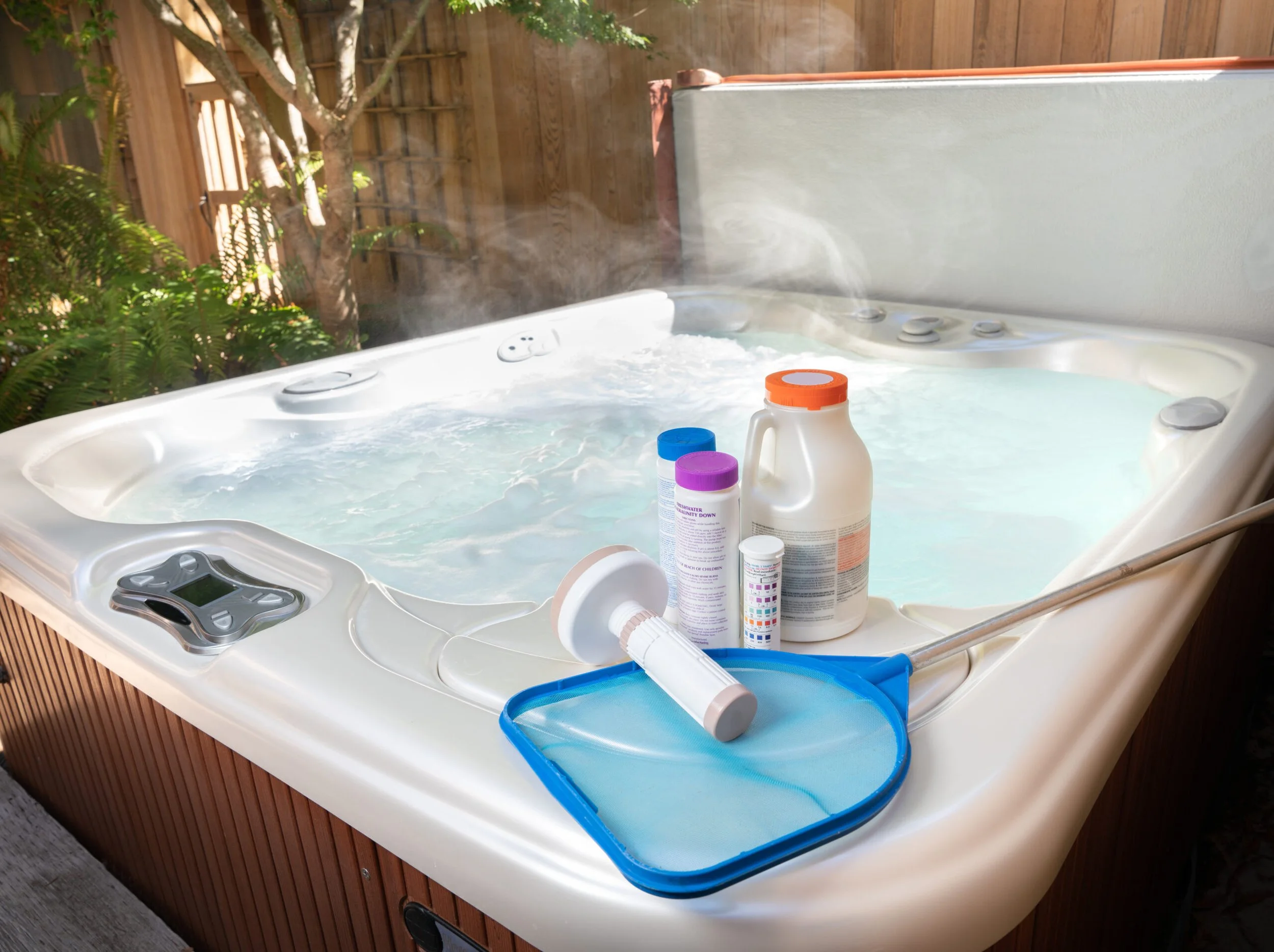
A hot tub is one of the best investments you can make for relaxation, recovery, and spending time with family. But like any piece of equipment that holds warm water, it needs regular care to stay clean, safe, and operating efficiently.
The good news? Hot tub maintenance doesn't have to be complicated. By following a simple routine, you can prevent most water problems before they start.
Step 1: Test Your Water
Ideally, you should test your hot tub at least 2–3 times per week, or more often if the tub sees heavy use. Visit your local pool store for accurate results and dosing recommendations! In between pool store visits, we suggest carrying your own test strips for regular maintenance.
Check the following:
Sanitizer (Chlorine or Bromine)
pH
Total Alkalinity
Calcium Hardness
Keeping these balanced helps protect your equipment, keeps the water comfortable, and ensures your sanitizer works effectively.
Step 2: Balance the Water
Once you've tested the water, adjust anything that's outside the recommended range.
A good order to follow is:
Total Alkalinity
pH
Calcium Hardness
Sanitizer
Visit our “Water Balancing 101” section for a more thorough, step-by-step breakdown of water balancing.
Step 3: Maintain Proper Sanitizer Levels
Your sanitizer is what keeps bacteria and contaminants under control.
Whether you use chlorine or bromine, maintain consistent levels rather than waiting until the water looks cloudy.
If you’re using a puck dispenser, make sure it’s topped up. If you’re using granular, make sure to test your water after you use your hot tub and adjust accordingly!
Step 4: Shock the Water
Every week—or after heavy use—shock your hot tub.
Shocking helps:
Break down body oils
Remove sweat and organic contaminants
Eliminate chloramines
Restore sanitizer efficiency
Think of shocking as giving your sanitizer a fresh start.
Note: It is highly suggested to use a NON-CHLORINATED shock with your sanitizer.
Save CHLORINATED shock for emergency-use, such as a suspected algae bloom or heavy clean-up cases. Your sanitizer levels may be too high to swim in for at 12-24 hours while the shock does its work. It is too harsh on the skin, as opposed to a NON-CHLORINATED shock, which will allow you to swim after only 30 minutes.
Step 5: Clean the Filters
Your filters capture dirt, oils, hair, and debris before they circulate through your spa.
A dirty filter forces your pumps to work harder and can lead to poor water quality.
A good routine is:
Rinse filters every 2–4 weeks
Deep clean/soak monthly
Replace every 12–24 months (depending on condition)
If your filter retains a cardboard-like colour that no longer washes out, it’s likely overdue for a change!
Step 6: Wipe the Waterline
Body oils, lotions, sunscreen, and cosmetics naturally collect around the waterline.
Use a soft cloth or spa-safe cleaner to wipe this area regularly before buildup becomes difficult to remove.
You may decide to invest in a “Zorbie” or another oil-absorbing sponge. These float around on the surface of your water to pick up any oil it comes across.
Step 7: Keep the Cover Clean
Your cover protects the water from debris while helping retain heat.
To extend its lifespan:
Clean the vinyl regularly
Remove standing water or snow
Leave the cover open briefly after shocking to allow gases to escape
Many tub owners invest in a good UV protectant spray to keep their cover fabric from fading, as well as a dirt/water-repellent.
“303 MARINE AEROSPACE ULTIMATE UV” is a popular one!
Step 8: Drain and Refill
No matter how carefully you maintain your water, dissolved solids gradually build up from chemical use and other substances.
Most homeowners should completely drain and refill their hot tub every 3–4 months, depending on usage.
During each drain:
Flush the plumbing with a line cleaner (eg. “AHH-SOME”)
Wipe down the shell
Clean behind pillows and around jets
Soak/replace your filter cartridge (to avoid contaminating your new fill with old bacteria)
Refill using a pre-filter if your water supply has minerals or metals
Starting with fresh water makes balancing much easier.
Step 9: Inspect Your Equipment
Take a few minutes every month to inspect your hot tub.
Look for:
Water leaks
Unusual pump noises
Dirty or clogged filters
Error messages
Damaged cover seals
Moisture around equipment
Catching problems early can prevent much larger repairs later.
You may also decide to contact us for a professional inspection.
See our “What to Look Out For” and “Error Codes” page for a more comprehensive guide on common issues and what they may indicate.
Step 10: Create a Maintenance Routine
Consistency is the secret to an easy-to-maintain hot tub.
A simple schedule might look like this:
2–3 Times Per Week
Test water
Adjust sanitizer if needed
Weekly
Balance water
Shock the spa
Wipe the waterline
Monthly
Deep clean filters
Inspect equipment
Clean the cover
Every 3–4 Months
Drain and refill
Flush plumbing
Perform a full cleaning
Following a routine keeps maintenance predictable and helps avoid cloudy water, unpleasant odours, scale buildup, and unnecessary service calls.
Need Help?
Not everyone has the time—or wants the responsibility—of keeping up with hot tub maintenance.
Whether you have a question about your water chemistry, need help troubleshooting an issue, or would simply like someone to handle the maintenance for you, we're happy to help.
Even if you're not one of our regular customers, feel free to reach out. We believe every hot tub owner deserves reliable advice, and sometimes a quick answer can save hours of frustration.
A well-maintained hot tub lasts longer, performs better, and is always ready when you need a chance to relax.